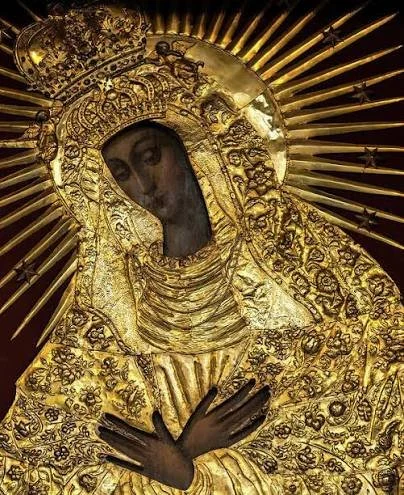
Saint Catherine of Bologna (1413–1463) was a Franciscan Poor Clare who painted, illuminated manuscripts, and played music inside her monastery walls. Educated at court before taking her vows, she brought her artistic training into the cloister of Corpus Domini, treating studio work as an act of devotion rather than personal ambition.
Now remembered as the patron saint of artists, Catherine saw technical mastery and spiritual life as one. She prepared her own pigments, gilded her panels, and noted that the purpose of her work was simply "to increase devotion." Her life sets the standard for the Guild: that honest, patient craftsmanship done in community still has the power to draw the human heart back to God, the very source of all truth and beauty.
Saint Catherine of Bologna

We believe that all sacred art stems from the reality of the Incarnation. Because the divine entered human history in physical form, the tangible world became a vehicle for divine grace.
When an artist gathers raw earth pigments, wood, and precious leaf, studio work becomes an act of stewardship, reordering raw creation to reflect the unseen glory of God. True sacred art is not created for personal status or self-expression; it is an offering designed to quiet the senses and draw the human heart back to God, the very source of all truth and beauty.
The Seven Weapons of the Studio
Modeled after Saint Catherine of Bologna’s spiritual guidebook, The Seven Spiritual Weapons, our studio practice treats technical skill and spiritual discipline as one. The artist approaches the easel with seven core habits:
Patient Labor (Diligence): Pursuing complete technical command over drawing, painting, and studio craft. Through patient application across all media and methods, the labor building form, mastering value, and using raw materials becomes a quiet, steady spiritual exercise.
Quiet Mastery (Humility): Virtuosity on the panel remains subordinate to the sacred subject. Every mark and glaze is applied to elevate the heart of the viewer, ensuring that the work points back to its divine Source rather than drawing attention to the hand that painted it.
Reliance on Grace (Hope): Remembering that we are not the source of illumination, but its stewards and acknowledging that the artist generates no light of her own; but serves as a mirror—faithfully catching and casting back the radiance of the Creator
Reverence for Tradition (Memory): Sacred tradition is a living flame, not a museum piece. We study historical methods not to repeat the past, but to equip the artist with the technical confidence to craft fresh, contemporary expressions of eternal truths.
Purity of Intent (Purpose): Keeping the ultimate end of every brushstroke clear: to inspire reverence, foster prayer, and cultivate devotion.
Order in the Workplace(Stewardship): Maintaining deep reverence for our materials, safety, and working space. By establishing physical order and care in the studio, we cultivate the interior quiet necessary for contemplation and focus.
Perseverance in the Unfinished (Fortitude): Facing the difficult, messy stages of a painting—the wipe-outs, underpaintings, and corrections—with faith that beauty emerges through steady, incremental work.
Fellowship, Continuity, and Sanctuary
Sacred craftsmanship is not meant to be practiced in isolation. Following the tradition of historic guilds and monastic workshops, the Guild of Saint Catherine exists to foster a genuine community of craft among women.
Through shared studio space, mentorship, and workshops, we pass down ancient methods to future generations. Through mutual support and our dedicated scholarship fund, we ensure that religious sisters and emerging artists have a dedicated place to cultivate their gifts in service to the Church.